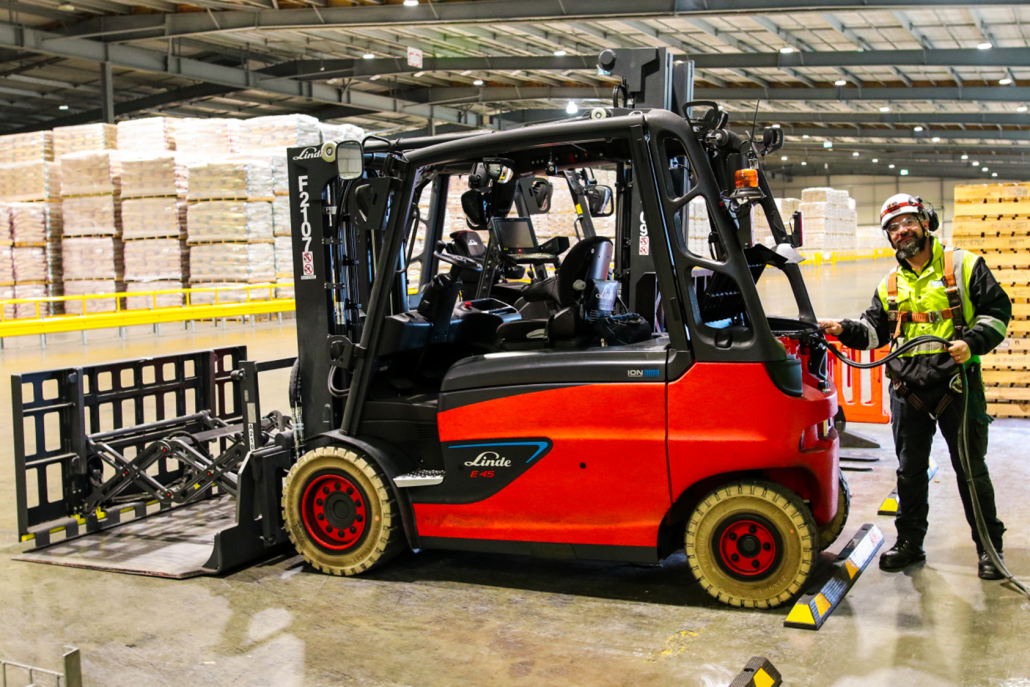
The Shift to Electric Fleets is Already Happening – Are you set up for it?
With fuel prices bouncing around and ongoing uncertainty in supply, more sites are starting to seriously look at electrifying their fleets.
Forklifts, yard vehicles, service fleets – it’s not just about sustainability anymore. It’s about controlling costs and reducing reliance on diesel.
But here’s the reality most people hit pretty quickly:
- The vehicles are the easy part.
- The infrastructure is where it either works… or becomes a problem.
What changes when you electrify?
Switching to electric isn’t just swapping out machines.
You’re introducing:
- High, concentrated charging loads
- New peak demand patterns
- Continuous overnight or shift-based charging
- More pressure on existing switchboards
If that’s not planned properly, you end up with nuisance trips, capacity issues, or expensive rework
What we’re seeing in the real world
This isn’t theory – we’ve already delivered this across large industrial sites including multiple EV charging infrastructure upgrades to support the staged electrification of forklift fleets.
That work included:
- Assessing existing switchboard capacity
- Installing high-capacity EV charger distribution boards (up to 800A)
- Rolling out multiple charger points across sites
- Integrating into existing MCCs and switchboards
- Monitoring load behaviour and planning for future expansion
All delivered in live production environments without disrupting operations.
Where things usually go wrong
This is where jobs fall over if they’re not done properly.
We regularly see:
- Switchboards that don’t have the capacity for charging loads
- No planning for future expansion (so it all has to be redone later)
- Charging installed without understanding peak demand impacts
- No load management strategy
It might “work” at the start – until everything’s plugged in at once.
What proper setup looks like
From the work we’ve done, getting this right comes down to:
- Proper switchboard capacity assessment (not guesswork)
- Staged infrastructure planning so you can scale over time
- Load monitoring to understand real usage
- Designing charger layouts that suit how your site actually operates
- Allowing for future growth from day one
That’s how you avoid ripping it out and starting again in a few years.
Why more businesses are moving now
This shift is picking up pace for a reason:
- Fuel costs are volatile and hard to control
- Electricity pricing is more stable and predictable
- Maintenance costs on electric equipment are lower
- Supply chain risk on diesel is becoming a real concern
Electrification is starting to stack up financially – not just environmentally.
Thinking about electrifying your fleet?
Electrifying your fleet isn’t just an equipment decision. It’s an infrastructure decision.
Get that right, and you’ve got a scalable, lower-cost system that supports your operation long-term.
Get it wrong, and you’re dealing with capacity issues, downtime, and rework.
If you’re planning the shift – or even just looking into it – it’s worth getting the infrastructure side assessed early.
Get in touch with the team at EAS — we’ll make sure it works the way it should.