Riddle answer – September newsletter
The answer is 6.
All the animals are either on the bed or flying so the only legs on the ground are yours (2) and the four legs of the bed.
The answer is 6.
All the animals are either on the bed or flying so the only legs on the ground are yours (2) and the four legs of the bed.
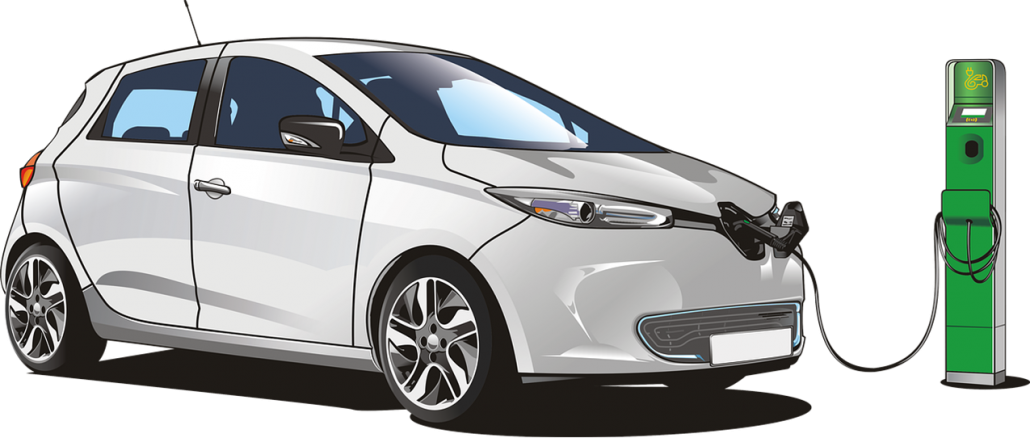
From 1 July 2021, people buying new and imported EVs can get a rebate of $8,625 on new EVs, or $5,750 on new hybrids. So now may be a great time to investigate moving to Electric Vehicles for your business.
So why choose an EV?
If you want to work out the total cost of ownership for EVs for your business check out genless – cost of ownership tool
EAS have the skills and experience to assist you with installing EV chargers for your fleet or staff carparks. For more information, just get in touch with the team today on 07 834 0505.

Only the simplest powered electrical systems and equipment require just an on-off switch.
In reality, most processes need a control system to manage commands and/or direct or regulate the behaviour of other devices or systems.
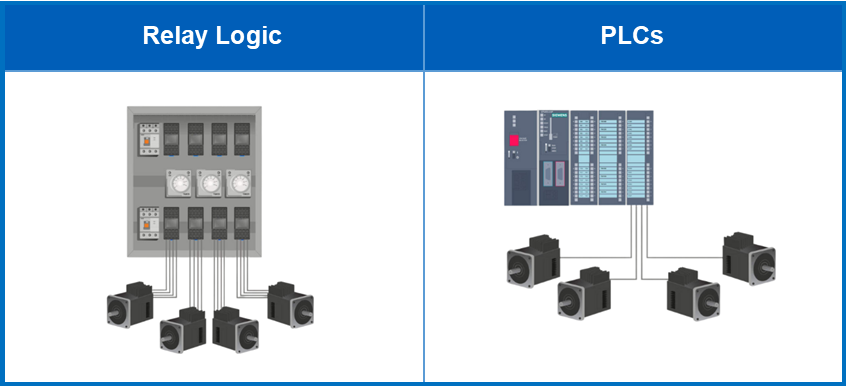
Originally, these control systems would have been designed using Relay Logic which is a large array of hard-wired controls utilising sensors, switches, timers, relays & contactors. Relay Logic has many applications, including Compressor Control systems, Lighting Controls, Machine Safety Circuits and much more.
With the development of microprocessors in the 1960s, Programmable Logic Controllers (PLCs) were created. PLCs use programming language, referred to as ladder logic, to create the relay logic and as such offer many advantages over traditional relays.

The main advantages of PLCs over relays are:
While PLCs offer many advantages, relays do still have a place within a control system. They provide a simple and efficient tool that requires no advanced programming for proper commissioning. Relays can be particularly useful:
If you would like advice on the best control system for your application, get in touch with the EAS team today on 07 834 0505 so we can work together to find the best solution for you.
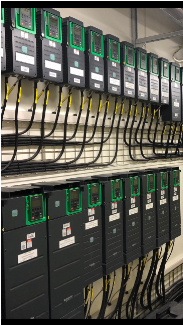
Variable Speed Drives (VSD) control motor speed in response to varying process demands in your plant. The motor speed adjustment can be based on feedback from the process; for example flow rate, temperature or pressure so that process control can be improved.
Due to the ‘magic’ of affinity laws, small decreases in the speed of pumps and fans or the pressure of pumps can lead to large decreases in energy use meaning the use of VSDs can provide significant energy savings. For example:
Other benefits of using VSDs include:
Variable Speed Drives are a vital component of your plant and as such they require regular preventative maintenance checks to ensure your plant is operating at peak performance.
Key checks include:
Why are preventative maintenance checks so important?
Preventative maintenance checks reduce the risk of your manufacturing equipment failing, resulting
in costly unplanned downtime. With regular preventative maintenance checks of your variable speed drives and other key equipment you can:
If you need assistance checking your Variable Speed Drives or other plant and equipment are in top condition – get in touch with the EAS team today on 834 0505.
E
mergency Lighting is designed to ensure that if there is a power failure, there will be enough lighting to allow people to exit your building safely.
The Australian and NZ Standard AS2293 outlines the level of light (lux) required to ensure people can exit safely from the building. Different levels of lighting may be required on exit routes depending on factors such as changes in floor levels or in areas where there are dangerous machines or hazardous processes operating.
It is vital that emergency lighting systems kick in as soon as they are required, particularly in areas where there may be dangerous machinery or hazardous processes operating or where a significant number of people (greater than 250) will be using the escape route. AS2293 outlines the level and timeframe of lighting that must be available. It also requires that there be sufficient back-up power to allow emergency lighting levels to be maintained until evacuation of all staff can be completed or full power restored.
EAS can provide you with a complete solution for all your emergency lighting needs. From design, installation, and commissioning to the installation of both temporary and permanent standby generators, back up Uninterruptible Power Supplies (UPS) systems in various sizes. We can provide an emergency lighting solution that will fit your needs whether it is for a small office building or a large industrial plant.
While the design and install of emergency lighting systems is a key part of ensuring your building complies with the NZ building code, it is also vital that these systems are regularly maintained to ensure that they operate when they are needed, and your building warrant of fitness is valid. EAS can assist you with routine testing and repair services, ensuring that all aspects of the Emergency Lighting system are operating as intended. During these routine checks, the team will inspect and record all aspects of the system, such as verifying the physical condition and illumination of each light, maintaining the BWOF documentation & ensuring all lighting is in the required place.
If you need help with the installation or maintenance of your emergency lighting system, get in touch with he EAS team today on 07 834 0505.
Instrumentation is the term used to describe all the different devices (or instruments) that are indicating, measuring, and recording physical quantities within your plant to ensure that your production processes are operating effectively.
Some types of measures commonly monitored include:
Flow
Flow meters are used to measure the flow in a process pipe. This can be product, water or chemicals used to sanitize the plant. They are used to record trends in product movement; how much water a plant uses or chemical usage for Clean in Place (CIP).
EAS has recently installed flow meters for clients to measure site water usage to identify opportunities for water saving initiatives. We have also used vortex flow meters on demin water lines where there is low conductivity.
Temperature
Temperature is one of the most important measures in production processes. Temperature monitoring can be used for anything from room temperature for controlling air supply to monitoring fluids in process pipes and many more. There is a diverse range of temperature measurement devices depending on the process or part of the plant being monitored.
Just some of the ways we have assisted clients with temperature gauges include:
pH
pH measures how acidic or basic a solution is. In food manufacturing changes in pH levels can affect the taste, freshness and shelf life of products. pH is one of the most common chemical measures as it is used in waterworks, sewage treatment plants and the production of food/beverages and health products.
EAS has recently installed pH sensors to provide pH protection on irrigation lines to prevent pasture loss and in stormwater lines to identify any spills before they get into our waterways.
There are many more types of instrumentation that EAS can provide to assist with your plant monitoring including pressure, conductivity, chlorine and turbidity.
It is also essential that any instrumentation is regularly calibrated to ensure you are getting accurate measures. Calibration compares the measures provided by the device being tested and the standard. Regular calibration of your instruments allows you to be confident they are accurately measuring inputs and outputs to ensure your facility is operating at peak performance.
The EAS team have a wealth of experience in installing and calibrating equipment for your plant or process. We have also recently employed Blair Pussell, a qualified industrial and control technician who has a wealth or knowledge and experience to assist you with your plant instrumentation.
If you would like advice or assistance on ensuring you have the equipment in place to monitor the performance and productivity of your plan, get in touch with the EAS team today on 07 834 0505.

Growing Economy

Forgive and Forget

In between jobs

On cloud nine
The third room is the safest because the lions would have died of starvation.
Equipotential bonding and earthing are essential parts of electrical safety. Both play an important part in preventing electrical shocks in your plant.
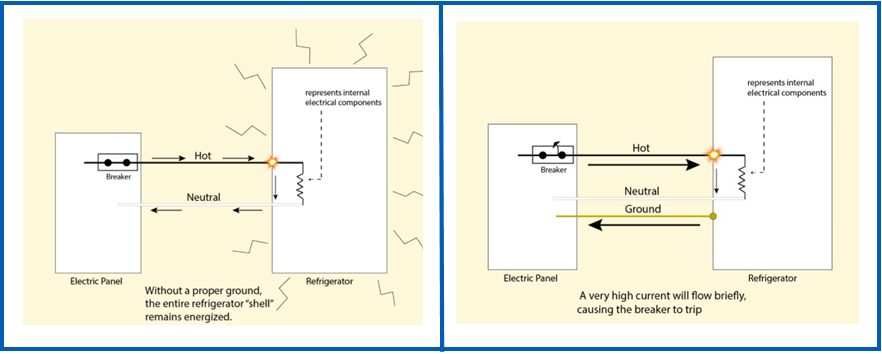
Electrical equipment requires earthing to ensure that if a fault occurs that the voltage has a safe path to travel where the surge in current will trip a breaker, cutting power to the equipment, making it safe to touch.
For example, if your fridge had a loose wire, that wire is live and if someone touched it, they would get an electric shock. The chances of touching the loose wire may seem slim, however if the fridge is not earthed and that wire touches the frame or body of the fridge, this would then cause the whole fridge to become ‘live’ meaning that if you walked up to the fridge and touched it you would be shocked or electrocuted.
The principal of earthing is to take that live current away, allowing it to travel down the electrical installation earthing path, where the surge in current trips a breaker supplying power to the fridge. This cuts all power to the fridge and makes it safe to touch.
morganinspectionservices.com
In addition to earthing electrical equipment further safety measures need to be taken to protect workers from the risk of electrical shock from other conductive equipment in your plant.
This is done by equipotential bonding. Equipotential bonding connects all accessible metalwork whether associated with the electrical installation (known as exposed metalwork) or not (extraneous metalwork) to the electrical service earth.
Within your building there will be many services that use metal connections including water pipes, gas piping, HVAC ducting and even the metal structure of the building itself. These can all provide a risk of current flowing through paths not designed to carry a path and create the risk of electrical shock for your workers.
Examples of what may require equipotential bonding as part of your electrical installation:
How does Equipotential bonding work?:
Equipotential bonding aims to limit the magnitude of touch voltages. Without equipotential bonding the risk is that the voltage flows between the ‘live’ electrical equipment and other conductive equipment in your plant – essentially making all metal parts in your plant ‘live’. If someone was to touch two of these things at the same time, they would create a circuit. Because of the difference in energy between the ‘live’ item and the other conductive equipment in your plant, energy would flow from the high potential point to the lower potential point as fast as possible via the connection (your worker). This could be fatal if the voltage is high enough. Equipotential translates to equal potential, so by bonding all the conductive parts it allows the potential (voltage) to be the same, reducing the risk.
Bonding is usually achieved with a large earth wire in good secure contact with the exposed extraneous conductive part(s) which is connected directly back to the main switchboards main earth bar and via this to the earth electrode. Equipotential bonding of earthed equipment ensures workers in an equipotential zone are protected because there is a nearly identical level of electrical potential between all points of the body.
Equipotential bonding also has a secondary goal of mitigating noise in the electrical network. Operation problems that can occur without effective equipotential bonding and grounding include:
EAS has the skills and experience to deliver high quality electrical solutions you can trust. If you’d like to find out more about ensuring the safety of your staff and equipment, get in touch with the EAS team today on 07 834 0505.

He was cleaning the windows on the inside of the building!